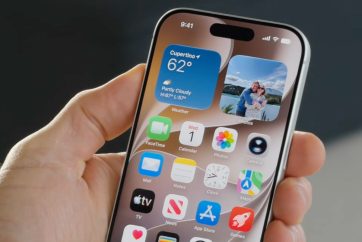
Apple Intelligence is Apple’s artificial intelligence system built across iPhone, iPad, Mac, Apple Watch and Apple Vision Pro, combining on-device models with larger cloud-based models to help users write, communicate, create images, understand what is on their screen and get more done across Apple’s apps.
First introduced in 2024, Apple Intelligence has expanded significantly with iOS 27, iPadOS 27, macOS 27, watchOS 27 and visionOS 27. The latest generation introduces Siri AI, deeper intelligence inside apps including Photos, Messages and Safari, expanded Visual Intelligence and new creative tools.
Apple says its approach is designed around personal context and privacy. Many requests are handled directly on the device, while more demanding tasks can use Private Cloud Compute, which allows compatible devices to access larger server-based models without making personal information accessible to Apple.
What is Apple Intelligence?
Apple Intelligence is not a single app or chatbot. Instead, it is a collection of AI features integrated throughout Apple’s operating systems and apps. That includes Writing Tools, image generation, Visual Intelligence, intelligent features in Photos and Messages, and the technology powering the new Siri AI experience.
The system can use information already on a device to provide more personally relevant assistance. With Siri AI, for example, Apple says the assistant can understand personal context across emails, messages, photos, notes and other information, allowing users to ask for something without necessarily remembering where it was originally stored.
The latest version also gives Siri broader knowledge and more conversational abilities. As The Apple Post reported following WWDC26, Siri AI can maintain natural back-and-forth conversations, understand what is happening onscreen and work more deeply with apps.
What is Siri AI?
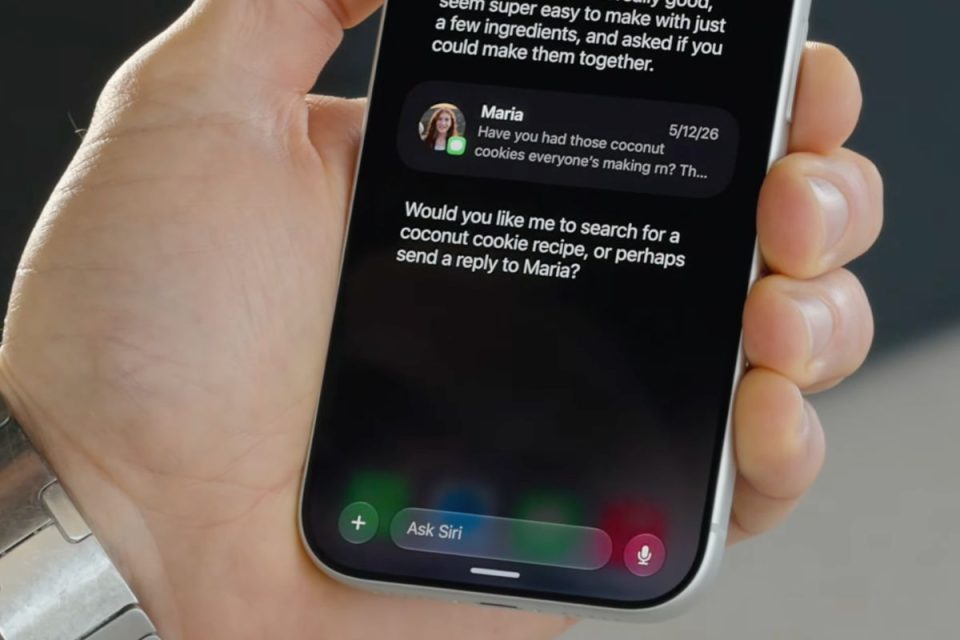
Siri AI is Apple’s next-generation Siri experience and one of the biggest parts of the latest Apple Intelligence upgrade. Rather than simply responding to individual commands, Apple has redesigned Siri as a conversational AI assistant capable of answering open-ended questions, brainstorming ideas and following a conversation over multiple requests.
Siri AI can draw on personal context to find information such as an old photograph, details buried in an email or something mentioned in Messages. It also has onscreen awareness, allowing users to ask questions or take actions based on information currently displayed on their device.
On iPhone, the experience includes a redesigned interface and a dedicated Siri app. Apple has also introduced features such as Write with Siri, which can help draft and edit text in apps including Mail and Messages. The Apple Post previously detailed the redesigned Siri AI experience and its rollout.
What can Apple Intelligence do?
Apple Intelligence stretches across many parts of Apple’s software. Writing Tools can rewrite, proofread and summarize text, while intelligent features can help users work with notifications, messages and other information more efficiently.
Photos includes Apple Intelligence-powered editing and search capabilities. Clean Up can remove unwanted objects from an image, while newer tools can intelligently adjust composition. The Apple Post has a guide to using Clean Up in iOS 27, alongside a separate guide explaining Apple Intelligence-powered Spatial Reframing.
Image Playground provides generative image tools, including the ability to create more realistic imagery for uses such as wallpapers, Contact Posters and backgrounds. Some image-generation features rely on server-based models and can be subject to daily usage limits.
Visual Intelligence allows compatible Apple devices to understand and act on things users see through their cameras or on their screens. Apple has expanded the technology beyond iPhone to platforms including iPad, Mac and Apple Vision Pro.
Which iPhones support Apple Intelligence?
Apple Intelligence requires more powerful hardware than iOS itself. On iPhone, it is supported on iPhone 15 Pro and iPhone 15 Pro Max, all iPhone 16 models and later compatible models.
That means an iPhone can support iOS 27 without supporting Apple Intelligence. Older models including the standard iPhone 15, iPhone 14 series, iPhone 13 series, iPhone 12 series and iPhone 11 series can run iOS 27 where supported, but they do not gain Apple Intelligence.
This distinction becomes particularly important with Siri AI because the new assistant is powered by Apple Intelligence. The Apple Post has a full breakdown of the iPhones compatible with iOS 27.
Which iPads and Macs support Apple Intelligence?
On iPad, Apple Intelligence is available on iPad mini models with the A17 Pro chip and iPad models powered by M1 or later. On Mac, Apple Intelligence requires Apple silicon, meaning Macs using M1 or newer Apple-designed chips are supported.
Apple Intelligence is also available on Apple Vision Pro. Supported Apple Watch models can access Apple Intelligence features when paired with a compatible Apple Intelligence-enabled iPhone nearby, although availability varies by feature and watch model.
Is Apple Intelligence private?
Privacy is a major part of Apple’s pitch for Apple Intelligence. Apple says many AI requests are processed directly on the device, allowing the system to work with personal information without sending that information elsewhere.
When a task requires a larger model, Apple can use Private Cloud Compute. The system is designed so that only information relevant to the request is sent for processing and the data is not stored or made accessible to Apple.
This hybrid approach lets Apple use larger cloud-based AI models when necessary while keeping as much processing as possible on the user’s own hardware.
Does Apple Intelligence cost money?
Apple Intelligence itself is included on compatible Apple devices and does not require a separate subscription for its core features.
However, Apple says some computationally demanding features, including certain image-generation capabilities, can have daily usage limits. Increased access to some features is available through most iCloud+ subscription plans.
Does Apple Intelligence use ChatGPT?
Apple Intelligence can integrate with third-party AI services for certain requests, but those services are separate from Apple’s own on-device models and Private Cloud Compute infrastructure.
Apple introduced ChatGPT integration as an optional way for Siri and Writing Tools to access additional knowledge and generative capabilities when appropriate. Users are told when information is being sent to an external service and can choose whether to proceed.
Apple has also explored giving users more choice over external AI providers. Bloomberg previously reported that Apple could allow alternatives including Gemini and Claude for some Apple Intelligence features.
Is Apple Intelligence available everywhere?
Availability varies by feature, device, language and region. Apple says Siri AI is initially rolling out in English rather than becoming available to every supported user and language simultaneously.
Some features can also arrive later than the operating system version in which they were originally announced. Apple delayed some features planned for the initial iOS 27 release, highlighting that Apple Intelligence will continue evolving through subsequent software updates.
For users who have access to Siri AI but are not immediately activated, Apple has also used a waiting-list system to manage the rollout. The Apple Post has a step-by-step guide to joining the Siri AI waiting list.
What’s next for Apple Intelligence?
Apple Intelligence is increasingly becoming a system-wide layer across Apple’s products rather than a collection of isolated AI features. Siri AI represents the most visible part of that transition, but Apple is also opening its intelligence technologies to developers and integrating AI more deeply into its own apps.
With iOS 27 and Apple’s other 2026 software releases, the focus has moved toward AI that understands personal context, works across apps and devices, and can complete more useful actions rather than simply generating text or images. Apple is expected to continue expanding those capabilities through future software updates as Siri AI becomes available more broadly.