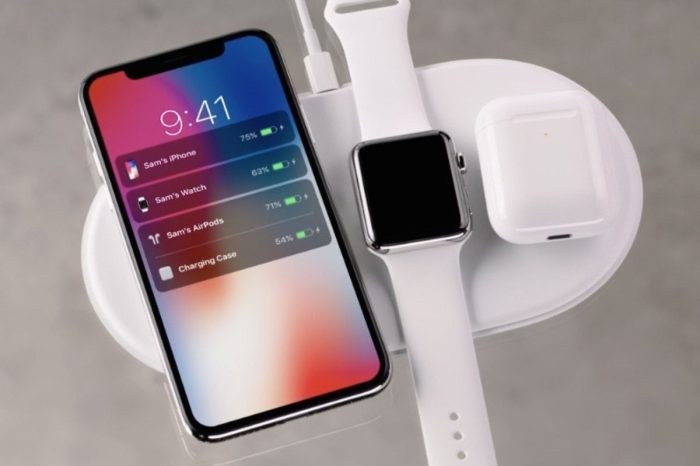
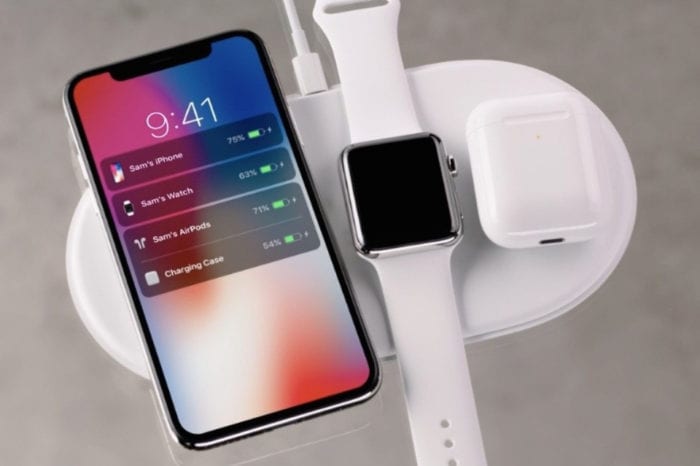
Nine years ago today, Apple unveiled AirPower alongside the iPhone X, promising a wireless charging mat unlike anything else in its lineup. It was supposed to charge an iPhone, Apple Watch and AirPods simultaneously, with users able to place their devices almost anywhere across its surface.
Announced on September 12, 2017, AirPower was expected to arrive in 2018. Instead, the year came and went without a launch, and on March 29, 2019, Apple took the highly unusual step of canceling a product it had already publicly announced.
AirPower’s failure was not because the idea lacked appeal. The problem was that Apple’s most ambitious feature, allowing several devices to charge without precise alignment, made the hardware extraordinarily difficult to engineer reliably.
Reports at the time pointed to a dense arrangement of overlapping charging coils inside the mat. Unlike a conventional wireless charger with a clearly defined charging position, AirPower needed enough coverage to recognize and power devices placed in different locations across its surface.
That design reportedly created serious thermal challenges. With numerous coils packed closely together and several devices potentially drawing power at once, prototypes were said to generate too much heat. Managing interference between the coils was also reported to be among the engineering difficulties Apple faced.
The Apple Watch complicated matters further. AirPower was intended to accommodate an iPhone, AirPods charging case and Apple Watch despite their differing charging requirements, while still providing the simple experience Apple had demonstrated on stage.
The project nevertheless appeared remarkably close to release. Apple continued referencing AirPower after its announcement, and packaging for the second-generation AirPods and Wireless Charging Case released shortly before AirPower was canceled even included references to the unreleased mat.
By March 2019, however, Apple had decided the engineering problems could not be resolved to a standard it was prepared to ship. Then-hardware engineering chief Dan Riccio said the company had concluded AirPower would not achieve Apple’s high standards and confirmed that the project had been canceled.
The cancellation was particularly notable because Apple rarely announces hardware and then abandons it before release. AirPower had spent roughly a year and a half as an officially announced product, turning what would normally have been an internal engineering failure into a very public one.
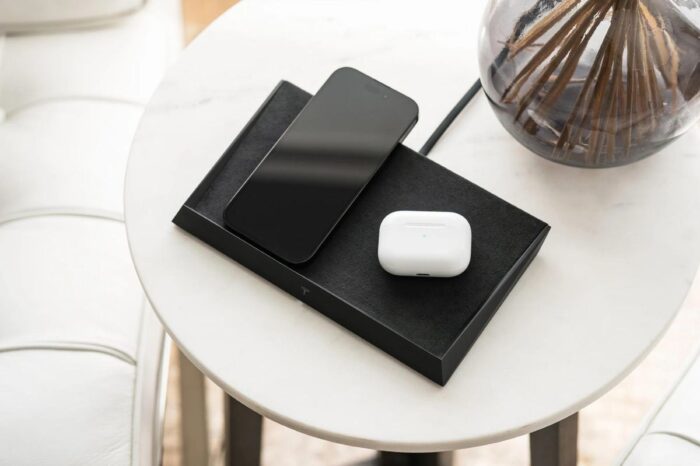
AirPower’s underlying idea has aged surprisingly well. Third-party manufacturers have since produced multi-device charging mats, while Apple’s introduction of MagSafe gave the company a different solution to one of wireless charging’s biggest frustrations by using magnets to ensure devices and charging coils are properly aligned.
The original AirPower concept still remains more ambitious in one important respect: Apple wanted users not to have to think about alignment at all. That convenience required the complicated overlapping-coil design that appears to have ultimately helped sink the project.
AirPower has not disappeared entirely from Apple’s history. Working and unfinished prototypes have surfaced since its cancellation, offering glimpses at just how far development progressed before Apple walked away.
The Apple Post examined AirPower’s engineering problems following its cancellation in 2019, and earlier this week we asked whether, nine years later, it might finally be time for Apple to revisit the idea.
Nine years after its unveiling, AirPower remains one of Apple’s most memorable products precisely because nobody was ever able to buy it. The concept was simple, but making that simplicity work proved to be the difficult part.