For years, Apple’s first foldable iPhone existed almost entirely through rumors, analyst predictions and supply-chain reports. Now that iPhone Duo is official, we can finally compare what was predicted with what Apple is actually shipping.
Some of the biggest rumors proved remarkably accurate. The book-style design, two displays, titanium construction, side-button Touch ID and premium price were all being discussed well before Apple unveiled the device. Other details, including the exact display sizes and Apple’s approach to the dreaded foldable screen crease, turned out differently.
One of the most persistent predictions concerned the displays. Analyst Ming-Chi Kuo said in March 2025 that Apple was working on an approximately 7.8-inch inner display and 5.5-inch outer display. In reality, Apple has gone slightly smaller, with a 7.6-inch inner Super Retina XDR display and a 5.4-inch outer display.
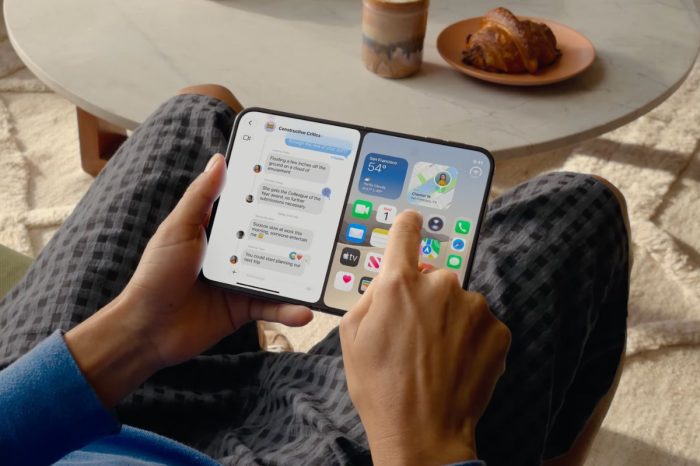
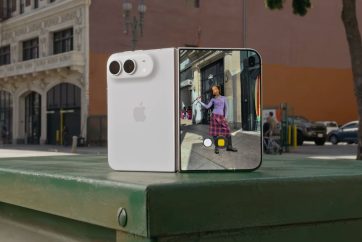
The overall form factor was right. Rumors consistently pointed toward a book-style device rather than a smaller clamshell design, and iPhone Duo does indeed open horizontally into a tablet-like screen. Apple says the outer display provides 90 percent of the screen area of iPhone 18 Pro, while the inner display is 50 percent larger than iPhone 18 Pro Max.
Predictions around biometric security were also accurate. Kuo said Apple would sacrifice Face ID to save internal space and instead use Touch ID built into the side button. That is exactly what Apple has done. iPhone Duo has no Face ID system, with Touch ID integrated into its side button and Apple Watch unlocking also supported.
The titanium rumor proved correct too. Reports suggested Apple would use a titanium alloy enclosure and a hinge incorporating titanium and stainless steel. The finished iPhone Duo uses grade 5 titanium, while Apple has developed a precision hinge made from more than 100 components and a 3D-printed titanium hinge cover.
Where expectations became particularly ambitious was the display crease. Reports repeatedly described Apple as pursuing a virtually crease-free or even completely crease-free folding display. Apple does not claim the finished product has no crease. Instead, iPhone Duo uses a nano-texture finish designed to reduce glare and reflections while minimizing the visibility of the crease. Early hands-on images have also shown that the fold can still become visible under certain lighting and viewing angles.
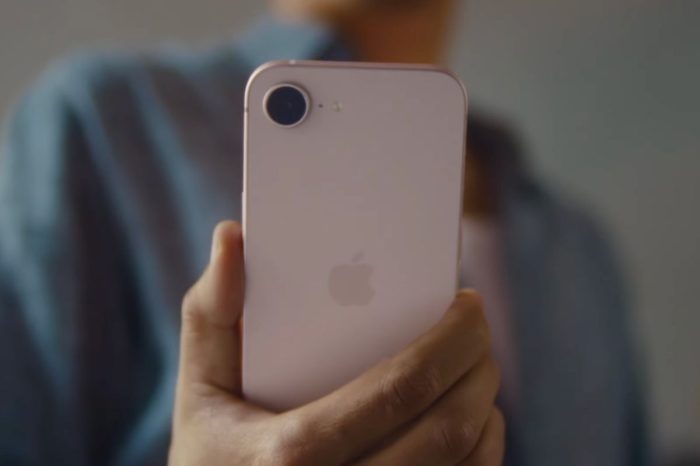
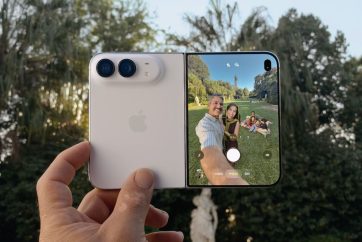
Camera rumors were broadly on target. The foldable iPhone was expected to use a dual-lens rear camera rather than the three-camera arrangement found on Apple’s Pro iPhones, and that is what customers are getting. Apple has instead leaned into the folding design itself, introducing camera experiences that make use of both displays.
The rumors also correctly anticipated an extremely thin device. Kuo originally suggested a thickness of roughly 4.5mm to 4.8mm when unfolded and between 9mm and 9.5mm when closed. Apple ultimately delivered a device thin enough to call iPhone Duo its thinnest iPhone ever when opened.
Pricing predictions were another close call. Early reports frequently placed Apple’s foldable above $2,000, with some estimates suggesting a $2,000 to $2,500 range. Apple has managed to come in just below that threshold, with iPhone Duo starting at $1,999 in the United States and £1,999 in the United Kingdom for 256GB of storage.
Storage, however, goes considerably further than many early reports suggested. Apple is offering 256GB, 512GB, 1TB and 2TB configurations, making iPhone Duo the first iPhone aimed at customers who want an unusually large amount of local storage alongside its larger folding display.
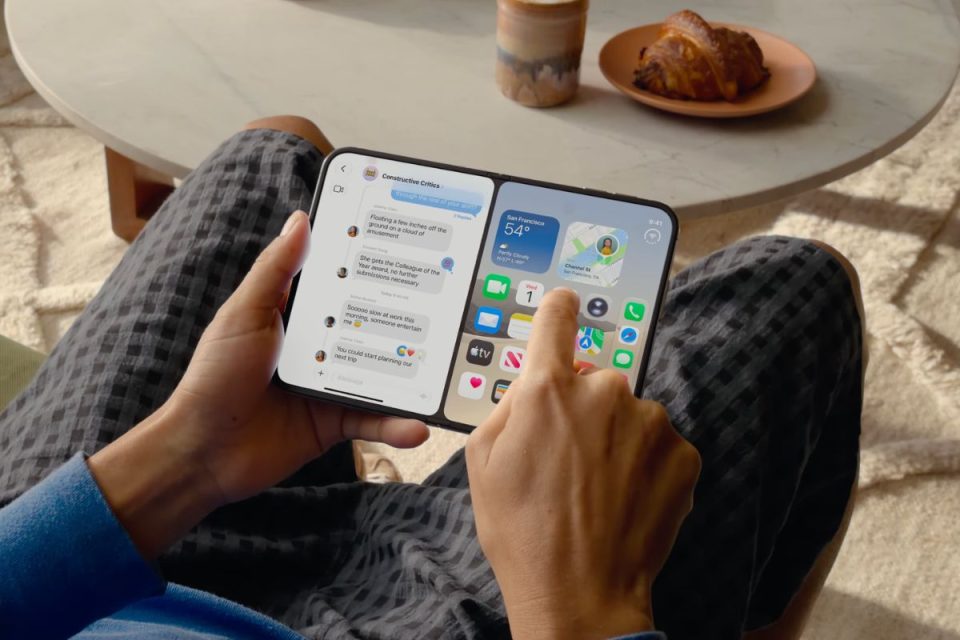
There were also features that received far less attention in the rumor cycle. Apple Pencil support is coming later this year, with Apple Pencil with USB-C working on either display. Apple has also redesigned iOS 27 for the new form factor, including Split View for running two apps side by side, saved app pairs and the ability to open two windows from the same app.
Battery life has turned out stronger than might have been expected from such a thin foldable. Apple uses a dual-battery architecture and rates iPhone Duo for up to 31 hours of video playback using the inner display or up to 44 hours using the outer display. Fast charging can take the battery to around 50 percent in roughly 20 minutes.
Perhaps the biggest difference between the rumor-era iPhone Fold and the real iPhone Duo is that Apple’s first foldable is not simply an iPhone with a flexible screen. The finished product includes software specifically built around having two displays, Apple Pencil support, a hidden inner FaceTime camera and new multitasking features that push it closer to the territory traditionally occupied by iPad mini.
For all the uncertainty surrounding Apple’s foldable plans over the years, the broad outline leaked surprisingly accurately. The analysts and supply chain got the book-style design, Touch ID, titanium body, dual cameras, premium price and approximate screen sizes right. The reality is more nuanced around the crease, while Apple kept several of the features that define the finished product out of the rumor mill entirely.
iPhone Duo will be available to pre-order from 5 a.m. PT (1 p.m. in the U.K.) on Friday, October 16, with availability beginning Friday, October 23.