Apple smart glasses: Everything we know about Apple’s next major wearable
 Tom Sykes
Posted On 28/09/2026
Tom Sykes
Posted On 28/09/2026 
Apple’s next major wearable may look far more ordinary than Vision Pro.
The company is developing its first pair of smart glasses for a potential launch in late 2027, with cameras, microphones, speakers and Siri AI built into frames designed to look much closer to conventional eyewear.
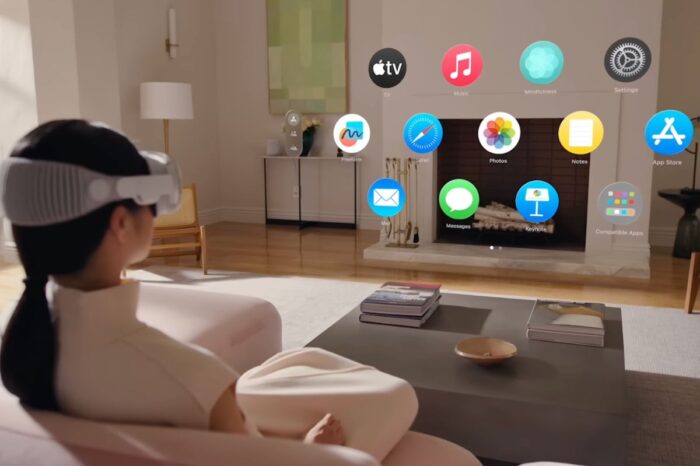
Unlike Vision Pro, Apple’s first smart glasses aren’t expected to place digital graphics in front of the wearer’s eyes. There is no augmented-reality display planned for the first generation. Instead, Apple is building what amounts to an AI wearable for the face, using cameras and Siri to understand what the wearer is looking at and respond through audio.
Here’s everything we currently know about the project.
Bloomberg’s Mark Gurman has reported extensively on Apple’s smart glasses plans, with the device becoming an increasingly important project inside the company as resources move away from other Vision Pro hardware.

Image: Apple
The current target is a launch in late 2027, although that timetable has already shifted during development and could change again.
Apple is also reportedly considering showing the glasses considerably earlier. The company has been targeting an unveiling around WWDC 2027, potentially giving developers and customers several months to understand the product before it reaches stores.
That would resemble Apple’s approach to entirely new categories such as Apple Watch and Vision Pro, both of which were revealed well before customers could buy them.
The most important thing to understand is that these aren’t the long-rumored “Apple Glass” augmented-reality glasses many people have imagined over the years.
Apple still wants to build glasses capable of overlaying digital information directly onto the real world, but that technology is reportedly several years away. The first product is expected to be much simpler.
Cameras built into the frames will allow the glasses to understand the wearer’s surroundings. Combined with Siri AI and Visual Intelligence, that could let someone look at an object, building, sign or product and ask Siri questions about what they can see.
The glasses are expected to work closely with an iPhone, rather than operating as a completely independent computer.
Apple is also expected to include microphones and speakers, allowing the glasses to handle phone calls, play music and deliver spoken notifications. In that sense, part of the experience could resemble wearing open-ear AirPods built directly into a pair of glasses.
Walking directions are another feature Apple has reportedly explored, with Siri potentially providing turn-by-turn navigation through the speakers.
The exact camera capabilities remain less certain.
Apple has reportedly considered allowing the glasses to capture conventional photos and video, similar to Meta’s Ray-Ban smart glasses. But privacy has become a major focus during development, and Apple has also explored versions where cameras can assist AI features without allowing ordinary recording.
The company has even prototyped glasses without cameras at all, according to Gurman, although camera-equipped hardware is currently considered the more likely direction.
That debate could become one of the defining differences between Apple’s glasses and competing products.
Camera-equipped smart glasses have raised concerns about people being recorded without realizing it. Apple is reportedly developing additional hardware and software privacy protections specifically for its glasses and is expected to make privacy a major part of how it markets the product.
The physical design is also taking shape.
Apple has reportedly tested at least four frame styles, including a larger rectangular design similar to Ray-Ban Wayfarers, a slimmer rectangular frame closer to the glasses worn by Apple executives, and two oval or circular designs in different sizes.
The frames have been tested in acetate, a material commonly used for higher-end eyewear, rather than relying solely on conventional molded plastic.
Image: Apple
Colors under consideration have reportedly included black, ocean blue and light brown, although Apple’s final selection could change before launch.
The cameras themselves may use vertically oriented oval openings surrounded by indicator lights, potentially giving people nearby a visible signal when the hardware is active.
Apple’s challenge will be fitting all of this into something people are comfortable wearing for hours.
Vision Pro demonstrated how much technology Apple can place around a person’s eyes, but it also demonstrated the compromises that come with weight. Apple’s glasses need to accommodate cameras, batteries, speakers, microphones, wireless hardware and processing without looking or feeling like a miniature headset.
That helps explain why the first version isn’t expected to contain displays.
Removing augmented-reality displays dramatically reduces the power, heat and computing requirements while allowing Apple to enter the smart-glasses market sooner. The iPhone can handle much of the heavy processing while the glasses concentrate on sensing the environment and delivering audio.
The strategy also places Siri at the center of the product.
Rather than taking an iPhone out of a pocket, pointing its camera and opening Visual Intelligence, a wearer could theoretically look at something and simply ask about it.
That could turn Apple’s glasses into one of the clearest demonstrations yet of what the company’s rebuilt Siri is intended to become: an assistant that understands personal context and the physical world around the user rather than simply responding to commands.
Apple is also looking beyond the first generation.
The company reportedly sees glasses eventually becoming another health and fitness platform alongside Apple Watch and AirPods. Future sensors could potentially collect movement or other health-related information, although those capabilities aren’t expected to be ready for the first model.
Further into the future, Apple wants to add displays and move toward genuine augmented reality.
That longer-term ambition helps explain why the smart glasses project matters so much to Apple’s Vision Products Group. The first pair may compete most directly with Meta’s Ray-Bans, but it could also be the first step toward the lightweight augmented-reality device Apple has spent years trying to build.
The shift is already affecting Vision Pro.
Apple is still exploring several designs for a completely revamped Vision Pro, but the project is much further away and its future is less certain as engineers concentrate on glasses.
A separate cheaper and lighter headset project has reportedly already been shelved.
Price is another major unanswered question. Apple hasn’t announced anything, but reporting around the project has placed the competitive market for the glasses broadly in the $200 to $500 range in the United States. That should be treated as context rather than a confirmed Apple price.
If Apple can land somewhere around that market, the glasses would be dramatically more accessible than the $3,499 Vision Pro.
There are still plenty of unknowns. Apple hasn’t revealed the product, its name isn’t confirmed, battery life remains a mystery and the final camera and privacy decisions could materially change the experience.
But the broad direction is becoming increasingly clear.
Apple’s first smart glasses aren’t being designed to replace Vision Pro by squeezing visionOS into ordinary spectacles. They’re a different kind of product: lighter, simpler and built around cameras, audio, the iPhone and an AI assistant that can see the same world you do.
If Apple’s current timetable holds, we could get our first official look at them at WWDC next year, before they reach customers toward the end of 2027.